 Reviews

 Proudly American

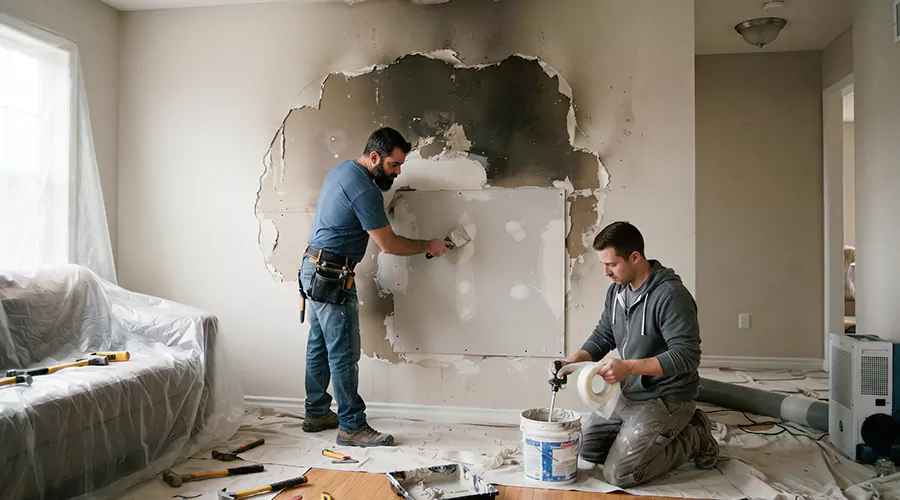
Smoke-damaged drywall can often be repaired when the board is still firm and the smoke residue remains near the surface. Replacement becomes more likely when soot has penetrated deeply or odor keeps returning. Heat damage and firefighting water can also make replacement the better option, especially when mold and drywall repair is needed to address additional moisture-related damage.
Drywall is porous, so soot can settle into the paper facing while odor moves deeper into the wall. The repair decision should depend on the board's condition and whether contamination can be removed.
When Can Smoke-Damaged Drywall Be Repaired?
Drywall is usually repairable when it remains structurally sound and the contamination can be cleaned from the surface. Light smoke exposure is the best candidate. A wall that stays firm after cleaning and no longer releases odor may be refinished instead of removed.
Repair is more reasonable when:
- The drywall is dry and hard.
- Soot is limited to the surface.
- The paper facing is intact.
- There is no blistering from heat.
- Smoke odor fades after cleaning.
- Firefighting water did not soak the wall.
Smoke damage cleaning normally starts with loose soot removal before any washing begins. After the wall is clean and dry, a stain-blocking primer may be needed before repainting.
When Should Smoke-Damaged Drywall Be Replaced?
Replacement is usually better when drywall has lost strength or smoke contamination cannot be removed. Persistent odor is an important warning because residue may remain inside the paper layer. Wet drywall also deserves closer attention after a fire.
| Drywall Condition | Likely Decision |
|---|---|
| Light surface soot | Usually repair |
| Firm drywall with washable staining | Often repair |
| Persistent smoke odor | Evaluate further |
| Soft or swollen board | Usually replace |
| Charred paper facing | Replace |
| Fire hose water saturation | Often replace |
The American Red Cross advises getting guidance on drywall soaked by fire hose water because saturation can affect the material's condition.
How Should Soot Be Cleaned From Drywall?
Loose soot should be removed before the wall is washed because moisture can smear dry residue into the paint. A suitable vacuum can lift loose particles when the nozzle stays slightly away from the wall. A dry cleaning sponge may also work on light deposits.
Use this sequence:
- Protect the floor beneath the wall.
- Remove loose soot without scrubbing.
- Test a dry cleaning sponge in a hidden area.
- Use a suitable wall cleaner after dry removal.
- Work on a small section at a time.
- Let the wall dry fully before refinishing.
The Red Cross recommends avoiding unnecessary contact with soot because it smears easily. It also advises cleaning walls before repainting.
How Can You Tell if Smoke Has Penetrated Too Deeply?
Deep smoke contamination often becomes clear after surface cleaning. The wall may look better while odor returns after the room stays closed for several hours. Recurring staining can also point to deeper contamination.
Watch for these signs:
- Smoke odor returns overnight.
- Black residue appears at seams.
- Staining returns after cleaning.
- The paper facing has blistered.
- The drywall feels soft.
- Joint compound has cracked after wetting.
- Odor is stronger near wall cavities.
- Soot appears around outlets.
- Mold develops after water exposure.
Smoke damage drywall problems become harder to repair when odor remains after repeated source cleaning.
What Can You Check Yourself Before Repainting?
A simple odor and surface-transfer test can show whether the wall is ready for refinishing. It cannot detect contamination inside a closed cavity, but it can reveal residue on the surface.
Try this check:
- Clean a small test area.
- Let it dry completely.
- Close the room for several hours.
- Return and check for smoke odor.
- Wipe the area with a clean white cloth.
- Look for gray or black transfer.
If the cloth stays clean and the odor does not return, the wall may be a good candidate for repair. Do not open the wall simply to investigate because wiring may be hidden behind the drywall.
How Much Does Drywall Repair Cost in 2026?
Professional drywall repair commonly costs about $296 to $928 in 2026 for many household projects. The amount depends mainly on the damaged area and the repair method. Painting or texture matching can add to the total. Smoke damage repair can cost more than a normal wall patch because cleaning may happen before drywall work begins. Cost alone should not decide whether to keep a panel. Replacement can be more practical when repeated cleaning still leaves odor behind.
When Should You Call a Professional?
Professional assessment is appropriate when smoke affected several rooms or the wall was exposed to heavy heat. Help is also reasonable when odor remains after repeated cleaning. Saturated drywall and hidden contamination can be difficult to judge by appearance alone.
Consider professional help when:
- Several rooms have soot deposits.
- Fire smoke damage restoration involves wall cavities.
- Firefighting water soaked the drywall.
- Electrical outlets show soot.
- Mold appears after the fire.
- Odor returns after cleaning.
- The drywall is charred or soft.
- Smoke remediation extends into insulation.
Fire damage repair may need separate evaluation when framing was exposed to heat.
How Can You Prevent Smoke Odor From Returning?
Smoke odor is less likely to return when residue is removed before primer or paint is applied. Covering a contaminated wall too early can hide staining without dealing with the source. The wall should be clean and fully dry before finishing begins.
Before repainting:
- Remove loose soot first.
- Clean the wall with a suitable product.
- Let the surface dry completely.
- Check for returning odor.
- Use a stain-blocking primer when needed.
- Replace sections that remain contaminated.
Smoke restoration works best when source cleaning comes before cosmetic repair.
Conclusion
Smoke-damaged drywall can often be repaired when the board stays firm and contamination remains at the surface. Replacement becomes more likely when the drywall is soft or charred. Persistent odor also points toward deeper contamination. Firefighting water can change the decision as well. If the wall condition remains unclear, professional assessment can help determine whether cleaning or replacement makes more sense.
Frequently Asked Questions
Can you paint over smoke-damaged drywall?
Only after soot has been removed and the wall is completely dry. A suitable stain-blocking primer may be needed before the finish coat.
Does smoke odor stay inside drywall?
Yes. Drywall is porous, so smoke odor can remain below the surface when contamination is heavy.
Does black soot mean drywall must be replaced?
No. Light surface soot can often be cleaned when the drywall remains firm and undamaged.
Should wet drywall be replaced after a fire?
It may need replacement when fire hose water has saturated the panel or left it soft.
Can primer remove smoke damage?
Primer can block remaining staining after proper cleaning. It should not replace soot removal.
How do you know if drywall is too damaged to repair?
Softness or charring are strong warning signs. Persistent odor can also make replacement more practical.